How to Pack Light for a Trip of Any Length
A practical, adaptable approach to packing for short breaks, extended stays, and multi-stop journeys by matching clothing and essentials to the itinerary, laundry access, and the bag you will carry.
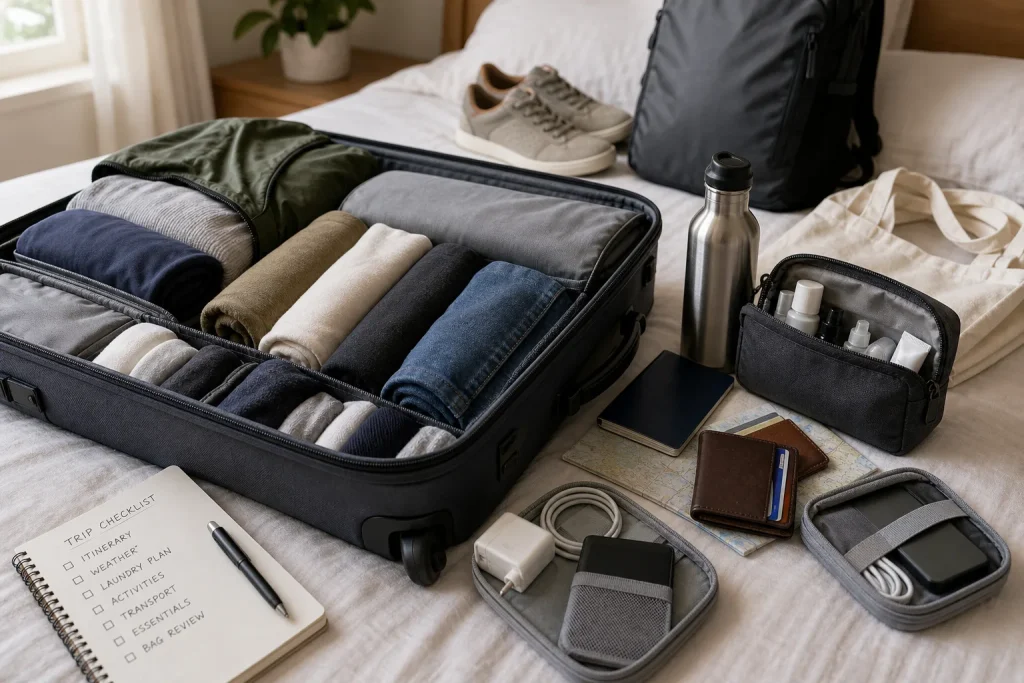
Packing light is not a contest to bring the fewest belongings. It is a way to keep your bag manageable while having what you need for the trip you are actually taking. A weekend away, a long visit, and a journey through several climates call for different decisions, even when the same basic method applies. Start with the route, activities, weather, and laundry opportunities; then choose items that serve those conditions rather than every possibility you can imagine. A clear plan also helps avoid buying replacements on the road or carrying things from one stop to the next without using them.
Match the plan to the trip’s length and route
For a short trip, list the fixed plans and the conditions likely to affect them. A museum visit and an evening meal might call for comfortable walking clothes plus one adaptable layer, not separate outfits for every hour. For an extended stay, identify the intervals between laundry opportunities and pack for those stretches. On a multi-stop route, note how the weather and activities change from place to place; clothing needed for a mountain walk should not automatically dictate what you carry for every city stop.
Separate confirmed needs from vague possibilities. A booked formal occasion may require a particular garment, while an unplanned chance to swim may not justify carrying swimwear if access is uncertain and the item has no other role. Check the forecast near departure and note expected rain, heat, or cool evenings. Also consider transit: if you will carry your bag through stations or change accommodation often, a bulky item must earn its place more clearly than it would on a single, settled stay.
Build outfits around shared uses
Choose a modest color palette so tops and bottoms work together without requiring careful matching each morning. Begin with clothes suited to the main activities, then add layers that adjust to conditions, such as a warm mid-layer and a rain shell. Favor pieces that can be used in more than one plausible setting: a comfortable shirt might suit sightseeing and a casual meal. Versatility does not mean asking one garment to meet every need; it means choosing items that each have a clear purpose across the itinerary.
Lay out complete combinations before packing. If a top works with only one bottom, decide whether that pairing is important enough to carry both. Remove duplicates that perform the same job unless a specific need—such as a spill-prone activity or a long interval without washing—makes a spare useful. Include sleepwear and activity-specific clothing when they serve the trip, but do not default to a new full outfit for each calendar day. The aim is a reliable range of combinations, not a separate costume for every imagined moment.
Set quantities around laundry and comfort
For a weekend without laundry, plan clean basics for the time away and select outer garments that can be worn more than once if they remain comfortable. For a longer visit, first confirm what laundry access really means: a machine at the accommodation, a sink, or no convenient option. If washing by hand, consider whether the garments are easy to rinse and likely to dry before you need them again. A plan that depends on a damp item being ready in the morning is a poor fit for a tightly scheduled stop.
Decide how often you are comfortable rewearing each type of clothing, rather than applying one rule to everything. Socks and undergarments may need fresh changes more often than an outer layer. Heat, strenuous activity, health needs, and local expectations also matter. As an invented hypothetical situation, imagine a traveler staying several nights in two cities, with a washing machine at the second lodging but none at the first. They pack enough clean basics for the first stretch, plan one wash after arrival at the second stop, and bring a backup top for a delayed wash; the observable result is a plan that does not rely on laundry being available en route.
Choose essentials by their actual role
Gather identification and tickets, prescribed medication, personal-care products, chargers, and items needed for activities. Check each against a specific moment when you will use it. Keep critical documents and medication accessible in your personal bag, while following applicable travel requirements. Bring the toiletries you use rather than a collection of speculative backups. If you transfer products to smaller containers, use containers suited to their contents and check relevant transport rules.
Reusable items can reduce disposable purchases when they fit the journey and will be used. A bottle or tote may be helpful on a trip with suitable refill or carrying opportunities, but an item that stays packed adds bulk without serving a purpose. Likewise, avoid bringing several gadgets for tasks one familiar device can handle. Do not omit something essential merely to make the bag smaller; the point is to carry a compact, functional kit, not to make the trip harder or create an avoidable need to replace an item.
Fit the bag to the way you travel
Pack the selected items into the bag you will actually use. Keep heavier belongings close to your back and transit necessities within easy reach. Small pouches can keep categories together, but skip organizers that take up room without improving access. Choose shoes for the activities and outfits they can support; stuffing small, clean items inside them can use otherwise empty space. Protect fragile or spill-prone belongings instead of wedging them into gaps where they may be damaged.
Carry the packed bag as you expect to carry it on the journey, including any stairs, transfers, or walks between stops. If it feels awkward, remove low-priority items and repack. A useful question is what you would leave behind if a transfer became rushed; likely candidates are items with no planned role or easy substitute. Keep some room for unavoidable additions, but do not fill empty space just because it is available. On a multi-stop trip, ease of moving the bag may matter more than having a different accessory at each destination.
Review with a trip-specific decision list
Before departure, compare the packed bag with the itinerary, forecast, laundry plan, and transport demands. For a short visit, confirm that you have appropriate basics and layers without adding a speculative outfit. For a longer stay, verify that the laundry plan has a realistic fallback. For a route through changing climates, check that each layer has a use at a particular stop. If a genuine gap remains, decide whether the item is necessary, can be borrowed, or can be obtained without undue difficulty at the destination.
- Check each garment against a planned activity; if it has no clear use, leave it out, but pack it if it meets a specific dress or comfort need.
- Check the forecast and route for rain or cold; if the shell or warm layer suits the expected conditions, keep it, but revise the layers if the conditions differ.
- Check when and where laundry is available; if washing is confirmed and fits the itinerary, pack for the interval before it, but plan clean changes for the full stretch if it is unavailable.
- Check whether a second pair of shoes serves a distinct activity; if it does, include it, but leave it behind if it duplicates the first pair’s role.
- Check whether each reusable item will be used on this route; if a likely refill or carrying need exists, bring it, but omit it if it will remain unused in the bag.
- Check the packed bag by carrying it through a short walk; if it feels manageable, keep the plan, but remove low-priority belongings if it feels awkward.
Keep a short note after the trip about what stayed unused and what was genuinely missed. Treat it as information for a future itinerary, not a rule that every trip must follow. Needs vary with destination, season, health, and comfort. A useful packing method adjusts to trip length and stops while keeping each item connected to a real need.