Keep Your Phone Useful Longer: A Care and Maintenance Guide
Practical ways to protect your phone, manage storage, and make a repair decision based on its condition, support, and your everyday needs.
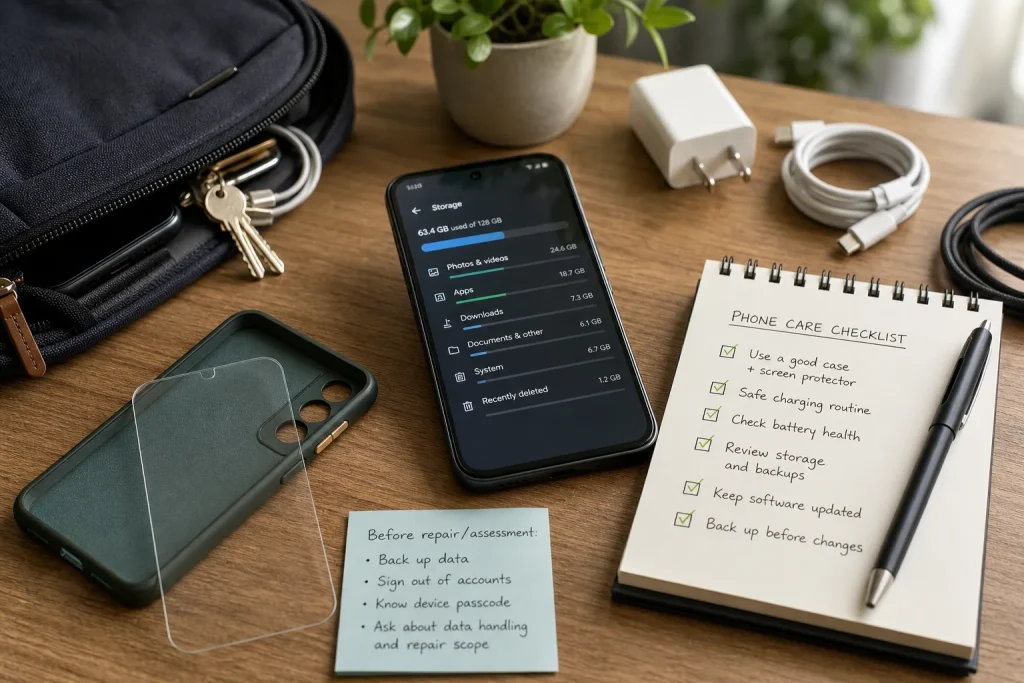
A phone can become frustrating before it stops working. Storage fills, a battery fades, or a small crack makes daily use awkward. Replacing it straight away is only one possibility: careful handling, selective storage cleanup, or a targeted repair may keep a familiar device useful. The right choice depends on the fault, the phone’s software support, and the features you need. This guide offers a practical way to assess those factors without treating accessories or repairs as universal solutions. The aim is a clear next decision: maintain the device, seek a professional assessment, or plan for a replacement while protecting your data.
Protect the phone where it faces risk
Choose protection for the way the phone is actually carried and used. If it shares a bag with keys, a case with a raised edge and a replaceable screen protector may address likely scrapes. If it mostly sits on a desk, a slimmer case may be easier to handle. Before buying an accessory, check that the buttons, ports, cameras, and charging method you use remain accessible. A case that makes the phone slippery or blocks an important feature can create more inconvenience than it prevents.
Keep the device away from liquids, grit, crushing pressure, and extreme heat, including a sunlit car. Wipe the exterior with a clean, dry cloth rather than letting dirt collect around openings. Follow the manufacturer’s guidance for cleaning and charging, and do not keep using a cable with split insulation or an unreliable connection. If the phone is swollen, unusually hot, or visibly damaged around its battery, stop using and charging it when safe to do so, keep it away from combustible materials, and contact the manufacturer or a qualified repair professional for specific advice. Do not press, puncture, or attempt to open it.
Make charging convenient and cautious
Use a compatible charger and cable in good condition, and keep the charging area clear. Avoid charging a phone under bedding or where heat cannot dissipate. Ordinary warmth during use is not by itself a reason for alarm, but unexpected or persistent heat deserves attention. If the phone or charger becomes unusually hot, disconnect it when safe, stop using suspect accessories, and consult the manufacturer’s guidance. Built-in battery-care settings may help fit charging to a routine, but they are optional; use them only if they suit your needs and the device’s instructions.
Choose a routine that leaves the phone ready for the tasks that matter. Someone who needs it for transit or work may prefer a convenient daytime charging point, while another person may charge at a regular time at home. Neither schedule restores a battery that no longer holds enough charge. Check the device’s own battery information, if available, and ask a qualified provider what service is appropriate. For swelling, unusual heat, or sudden physical changes, prioritize professional safety advice rather than experimenting with settings or continuing to charge.
Clear storage without losing important files
Start with the phone’s storage screen so you can see what is taking up space. Review large videos, downloaded media, files you recognize as duplicates, and apps you no longer use. Remove offline downloads only if you can retrieve them again. Before uninstalling an app, check whether it contains work, messages, or other information stored only on the device. Deleting a file may not free space until you also clear the recently deleted folder, so confirm what that folder contains before emptying it.
Before removing photos or documents, confirm that a backup has completed and that you can access the backed-up material. Cloud storage is not a substitute for checking what it includes or how restoration works. If internet access is unreliable, keep essential maps, work files, or other offline material and remove less useful items instead. Avoid unfamiliar cleaner apps that ask for broad access without a clear purpose. A selective review based on files you recognize is easier to control than deleting whatever an automated tool labels unnecessary.
Ask useful questions before repairing
Describe the specific fault and ask what the provider’s assessment includes. For a screen, charging port, button, or battery problem, ask whether parts are available, what the proposed work covers, and whether it could affect water resistance or another feature. Also ask what happens if the repair does not resolve the stated fault. Compare the provider’s answers with the phone’s overall condition and the practical effort of moving to another device; neither repair nor replacement is automatically the better choice.
Prepare for data and privacy questions before handing over a phone. Back up important material, and follow the provider’s instructions about accounts and device access. Ask how personal data is handled and whether the phone needs to be unlocked for the assessment. A qualified repair professional can explain risks specific to the device. If it has lost security support, cannot run essential apps, or has several unrelated faults, a repair may not address the reasons you rely on it. If one fault is clearly identified and the phone still serves your needs, an assessment can make the decision more concrete.
Build maintenance into existing routines
Attach phone care to tasks you already do instead of creating a demanding schedule. Check backup status before a trip, review downloads when storage becomes tight, and look over the case when wiping the screen. Install security updates through the device’s settings or the manufacturer’s official support channel, and make room carefully if an update requires it. Back up important files before major changes. Avoid update links sent unexpectedly in messages; open the phone’s settings yourself to see whether an update is available.
Keep the routine proportional to the phone’s role. A device used for navigation and emergency contact needs dependable charging, accessible software updates, and protection suited to its handling. A phone used occasionally at home may need less frequent attention, while still requiring safe storage and appropriate security updates. If a habit is inconvenient, simplify it rather than abandoning care altogether: keep a sound compatible charger in a useful place or choose a case that improves grip. The aim is reliable everyday use, not a flawless device.
Compare repair and replacement with real findings
Hypothetical worked example: Imagine a reader whose phone still runs the apps they need, but its battery no longer lasts through an ordinary workday. The case has a cracked corner, photos matter to the reader, and limited time makes setting up another phone a drawback. The reader first backs up the photos and checks the phone’s battery information. They contact a qualified provider and receive these hypothetical assessment findings: the battery is the identified fault, service is available, the cracked case is external and does not affect the repair, and the phone still receives the security updates the reader needs. The provider says the proposed service addresses the battery fault but cannot rule out unrelated future problems.
With those inputs, the reader’s decision is to request battery service and replace the damaged case, accepting the tradeoff that a repair addresses the current fault but does not make the phone new. If the provider had instead identified a damaged charging port as well, the reader would ask for the combined scope and risks before deciding; if the phone lacked needed security support, they would favor moving to a supported device rather than paying to address only the battery. Before any handoff, the reader confirms the photo backup is accessible and follows the provider’s privacy instructions. These concrete findings make the choice clearer without assuming every phone with weak battery life deserves repair.
Conclusion: Keep the phone useful, not perfect
Useful phone care is a matter of matching actions to the problem: protect the device where it faces risk, charge it according to sound guidance, clear storage selectively, and ask specific questions about a suspected fault. A case cannot restore software support, and a possible repair is not automatically worthwhile. Check what works, what you depend on, and what a qualified provider can explain. Then choose the option that best fits those needs while keeping data and safety in view.
When a phone no longer meets your practical or security needs, plan a careful transition. Back up and remove personal information using the manufacturer’s instructions, then use an appropriate reuse or recycling route. If the device has a battery concern, ask the manufacturer or a qualified professional how to handle it rather than placing it in ordinary waste. The goal is not to keep every phone indefinitely, but to avoid replacing a useful one without considering a clear, safe alternative.
- Check whether the case is cracked or no longer grips securely; if it exposes the phone to likely drops, then replace it with a compatible case, otherwise keep the current case.
- Check cables for split insulation or unreliable connections; if either appears, then stop using that cable and obtain a sound compatible one, otherwise continue using it while following device guidance.
- Check for swelling, unusual heat, or visible battery damage; if present, then stop use and charging when safe and seek manufacturer or qualified professional advice, otherwise continue ordinary cautious use.
- Check the storage screen for large files and confirm backups before deletion; if important files are backed up and accessible, then remove selected unneeded items, otherwise preserve them and make a verified backup first.
- Check whether the phone still receives needed security updates and runs essential apps; if not, then consider moving to a supported device, otherwise include repair in the options for a specific fault.
- Check the repair assessment for the identified fault, scope, and effects on other features; if it addresses the problem and the phone still meets your needs, then compare service with replacement, otherwise ask for clarification or consider replacement.