A Flexible Pantry Plan for Using What You Already Have
Turn pantry ingredients into adaptable meals and a focused shopping list, while avoiding common planning mistakes that leave food forgotten at the back of a shelf.
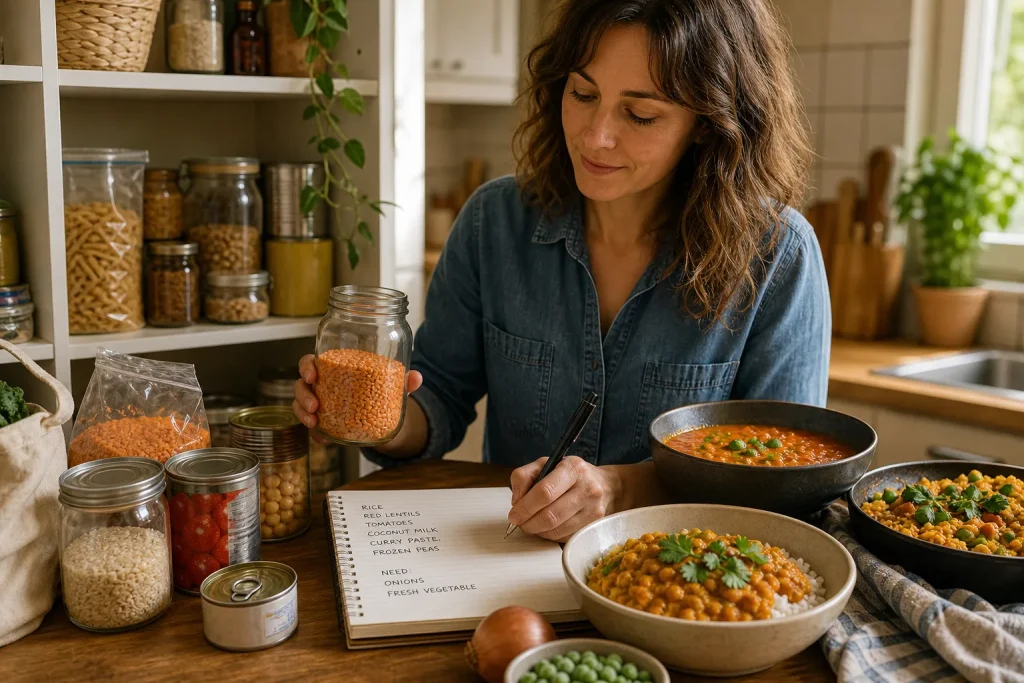
A pantry plan does not need to prescribe every meal in advance. Its purpose is to make the food already at home easier to notice and combine, then identify only the ingredients that would make those combinations workable. This approach is especially useful when packages are partly used, plans shift, or a recipe calls for more than you have.
Start with a quick, practical inventory rather than a full pantry overhaul. Group ingredients by how they might be used: grains, beans and other proteins, canned goods, seasonings, and items nearing their best quality. Then build meal ideas around those ingredients, leaving room to swap vegetables, herbs, or sauces. A careful decision checklist can help turn that flexible plan into a shopping list that supports what is already on your shelves.
Begin With What Is Visible and Usable
Take stock by bringing forward the foods that tend to disappear from view: an open bag of lentils, a small portion of pasta, or a can tucked behind newer groceries. Check packaging for damage, signs of moisture or pests, and any storage instructions. For opened foods, consider how they have been stored and whether their appearance and smell seem normal. Follow package guidance when available, and set aside anything that seems questionable rather than building a meal around it.
Record ingredients in broad groups, not as a detailed catalogue that becomes another chore. A note such as “rice, chickpeas, tomatoes, coconut milk, curry paste” is enough to spark combinations. Keep a separate mark beside foods you want to use soon because they are open, delicate, or easy to overlook. The aim is not to judge past purchases; it is to make the next useful choice visible.
Build Meals Around Flexible Components
Think in components instead of starting with a fixed recipe. A grain or starch can anchor a bowl, soup, or skillet; beans, lentils, eggs, tofu, or canned fish can add substance; and a sauce or seasoning can give the combination direction. Pantry staples become more adaptable when paired with whatever fresh or frozen produce is available. A tomato-based sauce, for instance, can work with pasta, beans, or a grain, depending on what needs using.
Write down a few meal shapes rather than exact menus: a soup, a tray bake, a grain bowl, or a quick pasta dish. For each, note one or two substitutions that suit your household. If there is no fresh spinach, frozen greens might work; if a recipe needs a particular bean, another cooked bean may fit. Keep dietary needs, cooking equipment, time, and household preferences in view. Flexibility should make dinner easier, not turn each meal into a puzzle.
Make a Shopping List That Completes Ideas
Before adding anything to a list, connect it to a meal you can already picture. Ask whether an ingredient fills a genuine gap: perhaps the pantry has rice and lentils but no vegetables, or pasta and tomatoes but no seasoning that suits the household. Add the missing components, then check the refrigerator and freezer for substitutes. This prevents a familiar mistake: buying ingredients for an appealing recipe while overlooking similar food already at home.
Organize the list by purpose or store section, but keep each item tied to its planned use. “Carrots for soup” is more useful than a loose reminder to buy carrots because it shows why the ingredient matters. If an item has several possible uses, note them briefly. Leave optional extras off until the core meals are covered. A list should guide decisions in the shop, not require a purchase when a suitable substitute is already available.
Avoid Plans That Are Too Rigid or Too Broad
A rigid menu can fail when a fresh ingredient spoils, schedules change, or one meal is no longer appealing. At the other extreme, a vague intention to “use pantry food” may not help anyone decide what to cook. Bridge the two by planning a small set of meal formats and assigning ingredients to them, while allowing swaps. Keep the most perishable items in the plan early and reserve sturdy pantry combinations for days when plans are less certain.
Another common mistake is treating every open package as an urgent task, even when it is still suitable to keep. Use storage guidance and ordinary judgment rather than forcing an awkward combination just to clear a shelf. It is also easy to forget that a meal may need more than pantry staples: a sauce might need acidity, a grain bowl might need something fresh, and a soup might need enough liquid. The list should cover those practical gaps without expanding into a new, unrelated shopping trip.
Use a Decision Checklist Before You Shop
Before leaving home or placing an order, check what is open, what is hidden behind newer items, and which foods need attention soon. Decide which meal idea each key ingredient supports. Check whether a suitable substitute is already in the refrigerator, freezer, or pantry. Confirm that the planned meals fit your available time, equipment, and dietary needs. Finally, separate necessary ingredients from optional ones, and remove anything that has no clear use.
- Check open packages and note what remains.
- Check storage condition and set aside anything questionable.
- Choose meal shapes that use ingredients already available.
- Check the refrigerator and freezer for suitable substitutions.
- Add only the missing ingredients needed to complete a meal.
- Mark the foods to use first and place them where they are easy to see.
These checks are meant to support sound decisions, not create a perfect inventory. If a food’s safety is uncertain, do not rely on a menu plan to make it acceptable; follow package guidance and seek qualified food-safety advice when needed.
Worked Example: A Flexible Three-Meal Plan
Hypothetical worked example: Imagine a household starting with rice, a partly used bag of red lentils, canned tomatoes, coconut milk, and curry paste. It also has frozen peas, but no fresh vegetables, and wants meals that can be cooked with one pot. The household checks that the packages are in usable condition, brings the lentils and tomatoes to the front, and chooses three meal shapes: lentil curry with rice, tomato-lentil soup, and a rice bowl using leftover curry with peas.
Next, it checks whether the curry paste and coconut milk are enough for the first meal, then adds only onions and a fresh vegetable to the list if those are genuinely missing. The expected result is a plan with shared ingredients and room to change the order of meals; the tradeoff is less variety than a menu built from unrelated recipes. If the household’s schedule changes, the rice bowl can become a later meal without requiring a different set of purchases.
A flexible pantry plan works best as a short conversation with your shelves: what is here, what can it become, and what would make that idea complete? Notice open and easily forgotten foods, choose adaptable meal shapes, and shop only for clear gaps. When plans change, substitute thoughtfully rather than abandoning the ingredients already on hand. Repeating this modest routine can make pantry food easier to use and make the shopping list more deliberate, without demanding a perfect inventory or a fixed menu.